Blog

Common Types of Smartphone Display Panels
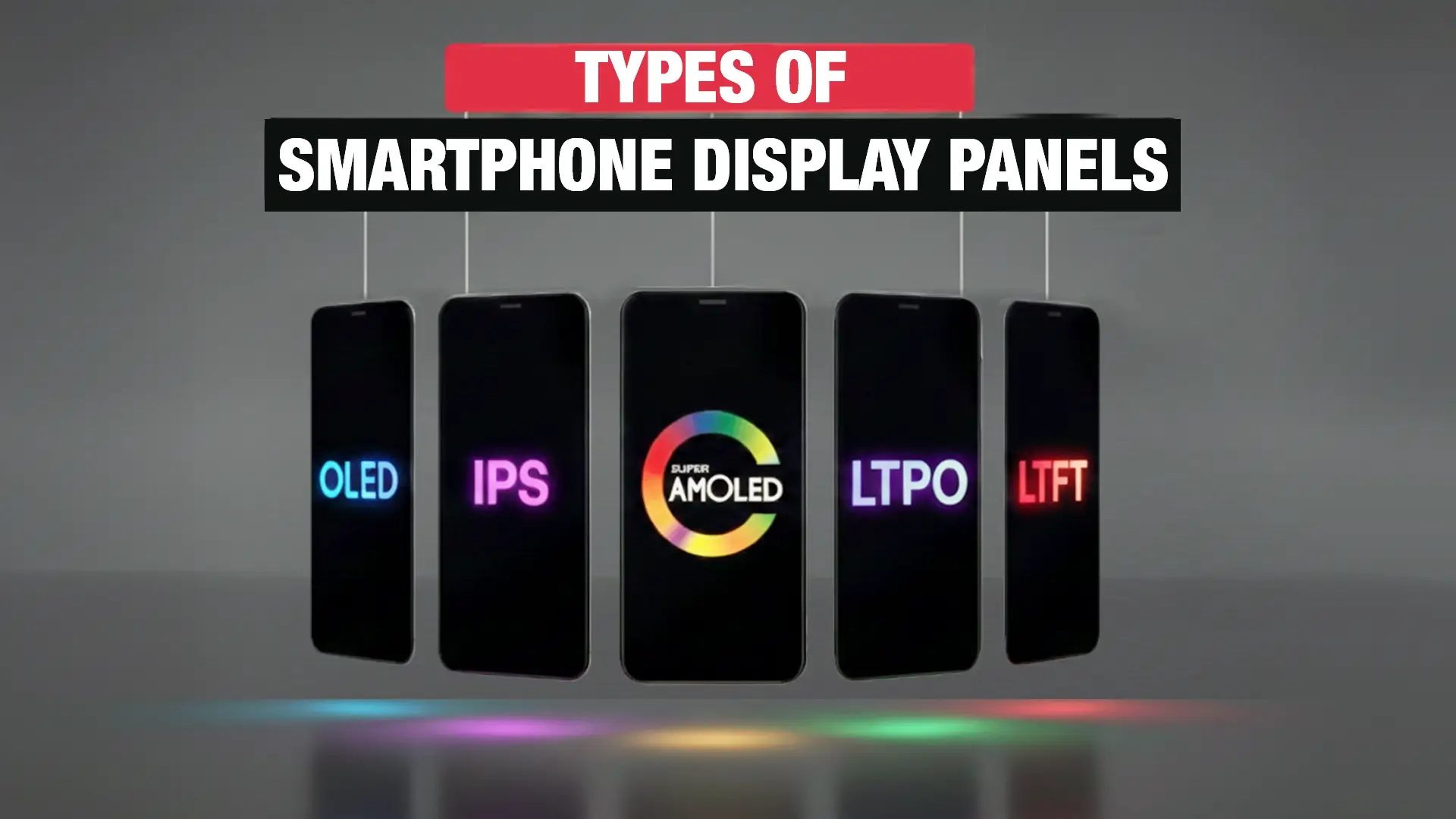
When choosing a smartphone, the display is one of the most crucial factors that impacts both your user experience and the device’s overall performance. Smartphone displays have come a long way from the old-fashioned LCD screens. Today, smartphones come equipped with a variety of display technologies, each designed to cater to different needs. The most common types include IPS-LCD, OLED, AMOLED, and Super AMOLED. But how do they differ, and which is right for you?
IPS-LCD Displays and what is IPS-LCD?
IPS-LCD (In-Plane Switching Liquid Crystal Display) is one of the most commonly found display technologies. IPS is a type of LCD that enhances color reproduction and viewing angles. Unlike traditional LCDs, IPS technology enables better color accuracy and consistent brightness across various viewing angles.
Advantages:
- Color Accuracy: IPS screens are renowned for delivering natural and vibrant colors, making them an ideal choice for those who value true-to-life images.
- Wide Viewing Angles: You can view the screen from almost any angle without significant color distortion or loss of contrast.
Disadvantages:
- Lower Contrast: Compared to OLED and AMOLED, IPS-LCD displays lack the deep blacks that can affect the contrast ratio.
- Power Consumption: Since backlighting is required for these screens, they consume more battery power compared to OLED panels, especially when displaying dark images.
Best Use Case:
IPS-LCD screens are perfect for budget-friendly smartphones and are often used in mid-range models. They work well for general tasks such as browsing, reading, and consuming media.
OLED Displays and What Are OLED Displays?
OLED (Organic Light Emitting Diode) technology works differently from traditional displays. Each pixel in an OLED screen emits its own light, meaning there’s no need for a backlight. This allows for vibrant colors, deeper blacks, and overall better contrast ratios.
Advantages:
- True Black Levels: OLEDs can turn off individual pixels to display absolute black, offering an unmatched contrast ratio.
- Power Efficiency: OLED screens consume less power, especially when displaying dark content, making them more energy-efficient.
Disadvantages:
- Price: OLED displays tend to be more expensive than IPS-LCD screens, making them less common in budget smartphones.
- Burn-in Risk: Prolonged display of static images can lead to burn-in, where residual images remain on the screen.
Best Use Case:
For users who prioritize vibrant colors and power efficiency, OLED displays are commonly found in mid- to high-end smartphones.
AMOLED Displays and What Are AMOLED Displays?
AMOLED (Active Matrix Organic Light Emitting Diode) is an advanced version of OLED technology. It utilizes an active matrix to control the brightness of each pixel, enabling even more precise control over image quality.
Advantages:
- Vibrant Colors: AMOLED screens are known for their deep, rich colors and true blacks.
- Enhanced Power Efficiency: AMOLED panels are more energy-efficient than OLED, particularly when displaying darker images.
- Better Performance: AMOLED displays outperform IPS-LCD displays in terms of high refresh rates and gaming.
Disadvantages:
- Color Accuracy: While vibrant, the color accuracy of AMOLED may not be as good as that of IPS-LCD, depending on the calibration.
Best Use Case:
AMOLED displays are often found in flagship smartphones, delivering a premium multimedia experience for gaming, video watching, and general use.
Super AMOLED Displays and What Are Super AMOLED Displays?
Super AMOLED is a further refined version of AMOLED, integrating the touch layer directly into the screen. This reduces thickness and enhances screen clarity, making it even more responsive.
Advantages:
- Improved Brightness: Super AMOLED displays provide better sunlight visibility, making them ideal for outdoor use.
- Thinner Design: The touch functionality is built into the screen, making the device lighter and thinner.
Best Use Case:
Super AMOLED panels are commonly used in high-end smartphones, providing an exceptional display experience with better outdoor visibility and a sleek design.
Dynamic AMOLED Displays and What Are Dynamic AMOLED Displays?
Dynamic AMOLED is an enhanced version of Super AMOLED, providing a notable improvement in brightness, color accuracy, and HDR support.
Advantages:
- Enhanced Brightness: Dynamic AMOLED displays offer much higher brightness levels, making them ideal for HDR content.
- Better Color Accuracy: With enhanced color reproduction, it offers a more true-to-life visual experience.
Best Use Case:
This type of display is often found in flagship smartphones, such as the Samsung Galaxy S series, catering to users who enjoy high-quality multimedia experiences, including gaming, streaming, and photography.
P-OLED Displays and What Are P-OLED Displays?
P-OLED (Plastic OLED) is a variation of OLED technology that uses a flexible plastic substrate instead of glass. This enables the creation of curved or foldable displays.
Advantages:
- Flexible Design: P-OLED is utilized in curved or foldable smartphones, providing greater design flexibility.
- Energy Efficient: Like other OLED panels, P-OLED offers power efficiency by turning off individual pixels.
Best Use Case:
P-OLED displays are most commonly used in premium devices, such as the LG G series or foldable smartphones.
LTPO Displays and What Are P-OLED Displays?
LTPO (Low-Temperature Polycrystalline Oxide) technology is a newer development that enables adaptive refresh rates. This allows the screen’s refresh rate to change dynamically based on the task being performed, significantly improving battery life.
Advantages:
- Battery Efficiency: LTPO displays can adjust their refresh rate based on activity (e.g., 60Hz for reading and 120Hz for gaming), conserving battery life.
- Smooth Experience: With support for high refresh rates, LTPO panels offer an ultra-smooth experience for gamers and power users.
Best Use Case:
LTPO displays are ideal for power users and gamers, as they provide smoother scrolling and better battery life.
Comparison of Smartphone Display Types
Here’s a comparison of the major display technologies for smartphones, showing their differences in performance, use cases, and battery impact:
| Display Type | Color Accuracy | Contrast Ratio | Battery Efficiency | Best Use Case |
| IPS-LCD | Good | Moderate | Low | Budget smartphones and general use |
| OLED | Excellent | High | Moderate | Mid-range smartphones, media consumption |
| AMOLED | Excellent | High | High | Flagship smartphones, gaming, multimedia |
| Super AMOLED | Excellent | High | High | Premium smartphones, outdoor use |
| Dynamic AMOLED | Excellent | Very High | Very High | Flagships, multimedia, HDR content |
| P-OLED | Excellent | High | High | Foldable smartphones |
| LTPO | Excellent | High | Very High | Power users, gamers |
Key Advantages of Smartphone Display Panels
Each type of smartphone display offers distinct advantages. Whether you’re a gamer, a photographer, or someone who loves watching videos, the display is essential. AMOLED and OLED displays deliver vibrant colors, deeper blacks, and energy efficiency, making them great for power users. Super AMOLED and Dynamic AMOLED push the boundaries of brightness and HDR support for multimedia experiences. IPS-LCD remains an excellent option for budget-conscious users who prefer wider viewing angles.
Where to Buy Original IPS, OLED, and AMOLED Displays in Bangladesh?
When it comes to finding quality smartphone displays, Nur Telecom in Dhaka is the top choice. Located at Shop No. 93, Basement 2, Bashundhara City Shopping Complex, Panthapath, Dhaka, we offer a wide range of original IPS, OLED, and AMOLED mobile displays. Whether you’re looking to replace a cracked screen or upgrade your device’s display, our expert technicians – including Md. Juwel, Md. Mahmud, Masud Rana, Rubel Hossain, Sojib Bhuiyan, Jahid Hassan, Md. Arman, and Md. Sohel – can help you find the perfect display solution. With years of experience in smartphone repairs, trust us to deliver the best in quality and service.
FAQs
What is the difference between OLED and AMOLED displays?
OLED displays use organic materials that emit light, while AMOLED displays use an active-matrix architecture to control their pixels for better performance.
Which display is best for gaming: AMOLED or IPS?
AMOLED displays are ideal for gaming due to their vibrant colors and deep blacks, but IPS can offer better viewing angles.
How does AMOLED improve battery life in smartphones?
AMOLED displays consume less power by turning off pixels when displaying black content, saving battery compared to traditional LCD screens.
What is the best display for outdoor visibility?
Super AMOLED displays offer the best outdoor visibility due to their high brightness and contrast ratios.
How do OLED and IPS displays compare in terms of battery life?
OLED displays are more energy-efficient than IPS, especially when displaying darker content.